
8 Key Trends in AI-Empowered E-commerce & Digital Marketing
🧠 Opening Insight: How AI Will Reshape the Future of Business

AI technology driving business transformation
As we approach the 2026–2027 horizon, Artificial Intelligence has definitively graduated from an experimental technology to the core engine of business growth. We are witnessing a paradigm shift where Generative AI and Large Language Models (LLMs) are no longer novelties but foundational tools revolutionizing content production, customer service, and product recommendations.
In a global landscape defined by intensifying competition and the relentless demand for E-commerce Technology , the old rules no longer apply. Success now hinges on Enterprise Automation and Data-Driven Decision Making . For brands aiming to dominate the market, integrating intelligence into every step of the Customer Lifecycle Management (CLM) process is not just an option—it is the primary driver of survival and profitability.
🔍 Trend 1: Generative AI Redefines Content Creativity & SEO Strategy
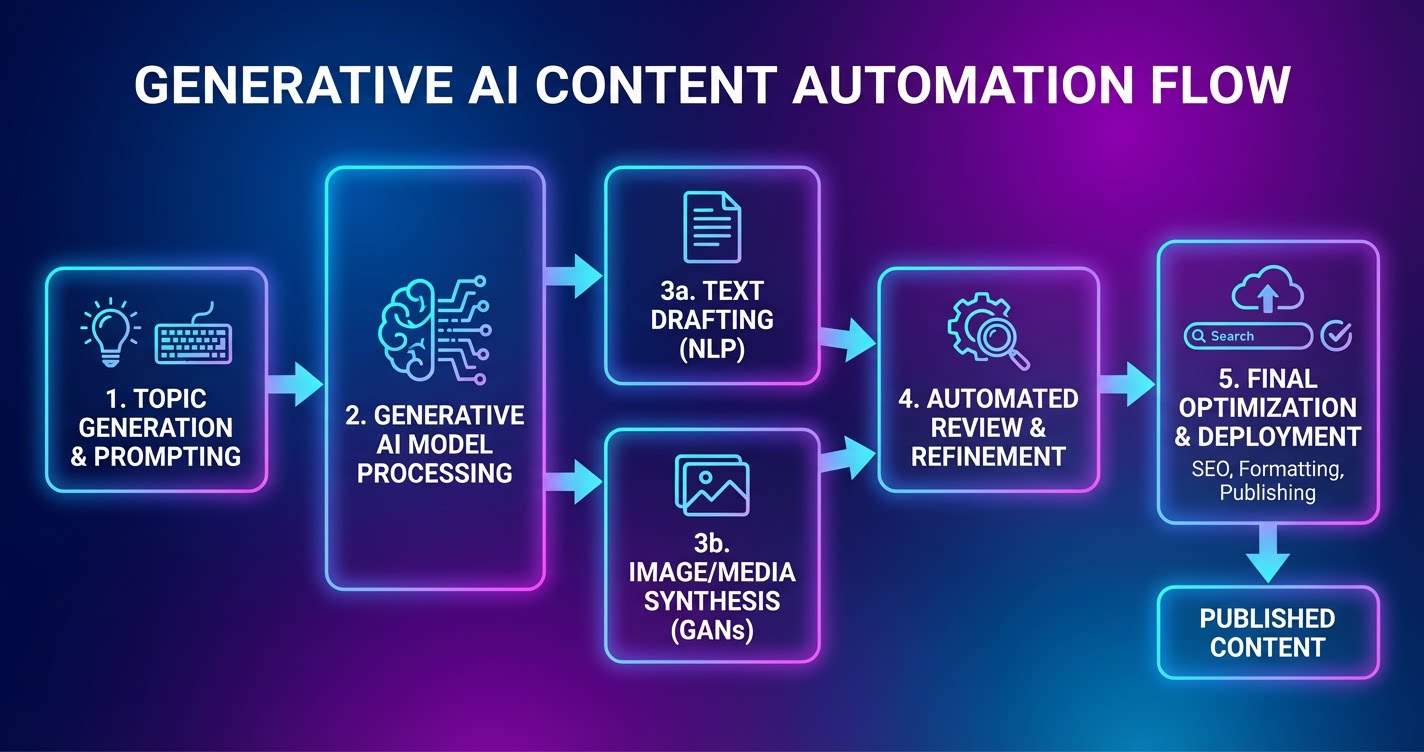
Generative AI process automatically creates content
However, creation is only half the battle. As search engines evolve into answer engines, traditional keyword stuffing is dead. We are entering the era of AI Search Optimization (GEO) and semantic understanding. Businesses must adjust their Content Optimization strategies to match the logic of generative engines, focusing on intent and context rather than just keyword density.
🛍️ Trend 2: AI Personalization as the E-commerce “Standard”

User data input leading to tailored product outputs
Hyper-personalization is no longer a luxury; it is the industry standard. An AI Recommendation Engine now drives the entire shopping journey, dynamically adjusting products, pricing, and promotions in real-time to maximize Conversion Rate Optimization .
Consumers in 2027 expect a “tailor-made” shopping experience. AI excels at User Segmentation , analyzing micro-behaviors to predict needs before the customer even articulates them. This shift is critical for increasing Customer Lifetime Value (CLV) , as generic storefronts fail to engage sophisticated digital natives.
🤖 Trend 3: AI Conversational Agents & Automated CX
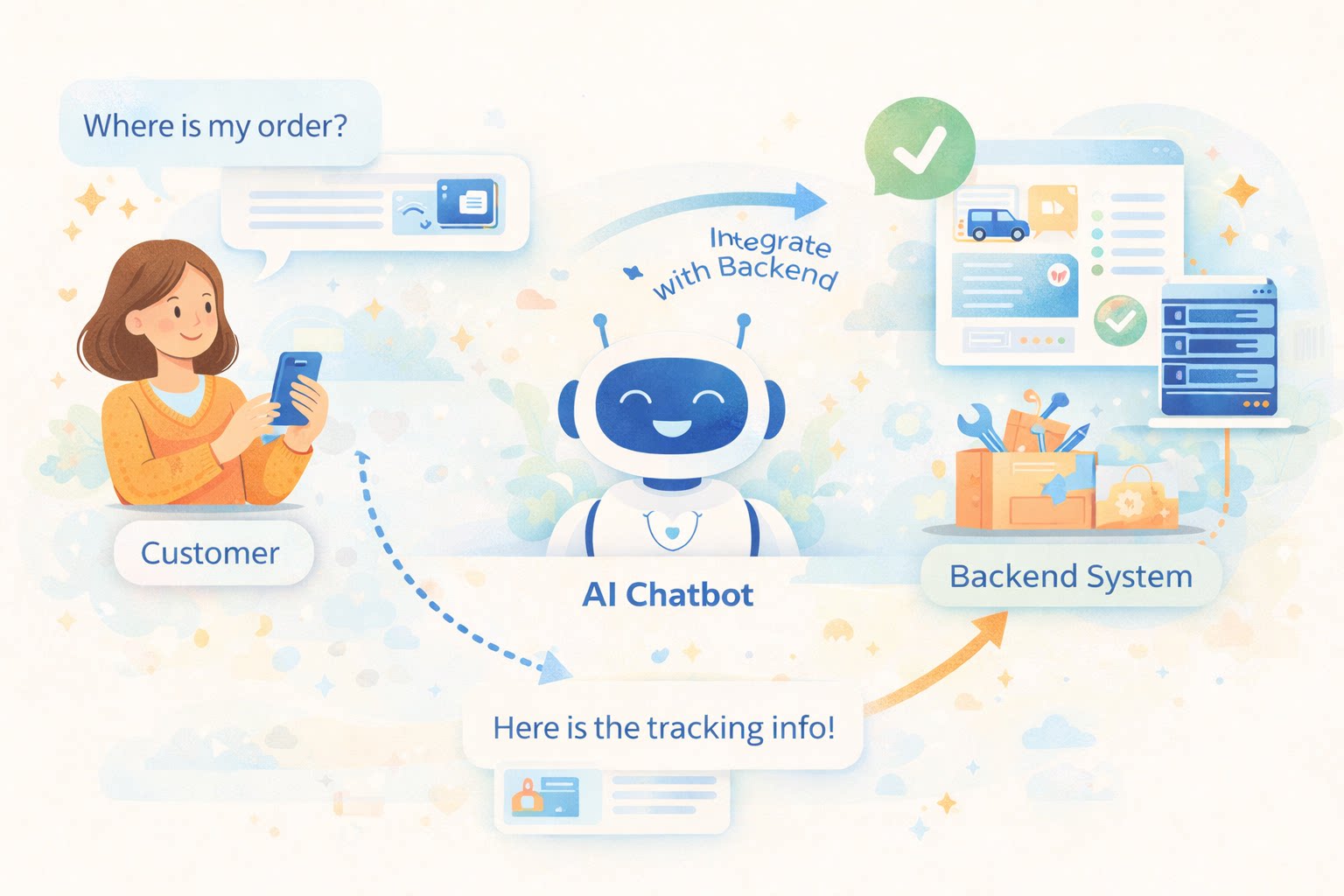
AI chatbot
The era of scripted bots is over. The next generation of Chatbots and virtual assistants creates a seamless, human-like dialogue. These AI Customer Service agents can handle complex consultations—from technical support to personalized shopping advice—fully integrated with business backend systems.
By providing 24/7 Automated Processes , businesses are simultaneously slashing labor costs and elevating customer satisfaction. This represents the pinnacle of Customer Experience Optimization (CX) , where immediate, accurate responses are guaranteed.
📦 Trend 4: Predictive Analytics Reshaping Inventory & Ops
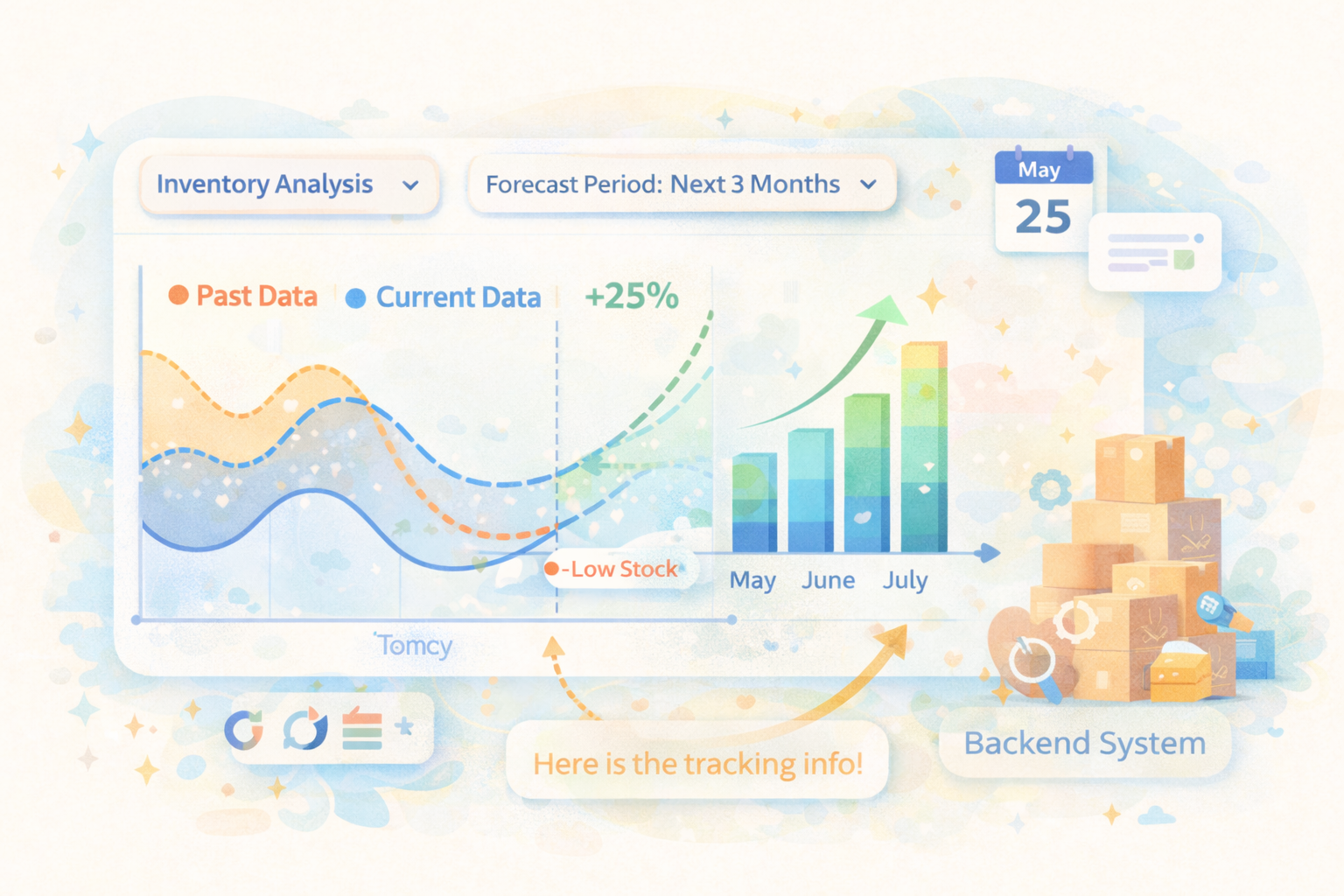
Data analysis curves and predictive models forecasting inventory needs
Supply chain resilience is a major competitive advantage. Predictive Analytics driven by AI is reshaping how retailers manage stock. By analyzing vast historical data and external factors, AI minimizes inventory overstock and prevents stockouts, significantly boosting Supply Chain AI efficiency.
Furthermore, Data-Driven Decision Making allows for sophisticated Dynamic Pricing strategies. Brands can now adjust pricing elasticity in real-time based on demand forecasts, maximizing margins without sacrificing sales volume.
🔐 Trend 5: AI & Cybersecurity — Defense and Risk Coexistence

AI-powered cybersecurity & data privacy ecosystem
As AI capabilities grow, so do the threats. AI Security is now a double-edged sword; it powers sophisticated attacks but is also the only tool fast enough to detect real-time anomalies and Cyber Protection threats.
Moreover, in the 2026–2027 regulatory landscape, Data Privacy is paramount. Adherence to strict frameworks (like GDPR/CCPA) is non-negotiable. Building a robust Compliance Strategy is not just about avoiding fines—it is the foundational element of brand trust and Risk Management .
🔎 Trend 6: AI Search Optimization (GEO) & Next-Gen Search

Traditional Search results vs AI Search results
With the dominance of platforms like ChatGPT, Gemini, and Perplexity, user search behavior is shifting from keywords to Natural Language Search . This creates a new discipline: AI Search Optimization (GEO) .
To remain visible, enterprises must reconstruct their SEO strategies. The focus must shift to Structured Data , Semantic SEO , and becoming an authoritative source that Smart Shopping Assistants cite. If an AI cannot “understand” your product data, your brand effectively becomes invisible.
🌍 Trend 7: Multimodal AI Transforming Product Interaction
The future of digital interaction is Multimodal AI . This technology processes text, images, audio, and video simultaneously, enabling Visual Search and highly interactive experiences.
E-commerce platforms can leverage this to create Immersive Content , such as dynamic video user guides generated on the fly or interactive product displays that respond to voice commands. This drastically improves Product Display Optimization , bridging the gap between physical and digital retail.
⚖️ Trend 8: AI Ethics & Transparent Commercial Practices
As AI permeates every layer of business, AI Ethics becomes a brand differentiator. Consumers are demanding Transparent Operations regarding how their data is used and how algorithms make decisions.
Brands must actively work to eliminate bias through Algorithmic Fairness and ensure strict Regulatory Compliance . Transparent practices are no longer just “nice to have”—they are essential for building long-term Brand Trust in an automated world.
📈 Conclusion & Actionable Roadmap
From Insight to Action: The 2026–2027 Strategy
The trends outlined above are not distant predictions; they are the immediate reality of the coming years. To turn these insights into growth:
-
Build a Strategic Roadmap: Move beyond ad-hoc AI tools. Develop a cohesive strategy that integrates AI into the core of your product and marketing teams.
-
Agile Adaptation: continuously monitor market intelligence to adjust content and product strategies. The AI landscape changes monthly; your strategy must be equally fluid.
-
Measure What Matters: Establish clear KPIs to evaluate AI success. Look beyond efficiency—measure AI Conversion Rates , Customer Satisfaction (CSAT) regarding automated interactions, and improvements in Lifecycle Value .
The future belongs to those who do not just adopt AI, but who master it to create genuine value for their customers.