
Scale Global Sales with the Best Translation API for E-Commerce: Text, Image & Video

2. Introduction
In the current digital economy, geography is no longer a limit on revenue—language is. For modern e-commerce brands, marketplaces, and SaaS platforms, the ability to sell cross-border is the fastest route to exponential growth. However, this opportunity comes with a significant logistical hurdle: localization.
Traditionally, launching in a new region meant hiring agencies, managing endless spreadsheets, and waiting weeks for manual translations. For a marketplace managing millions of SKUs or a global brand with dynamic inventory, this manual approach is a growth bottleneck. It is slow, expensive, and unscalable.
Furthermore, today’s customer experience is multimedia-rich. It is no longer enough to simply translate product descriptions. To truly convert international buyers, you must address text embedded in size charts, voiceovers in demo videos, and dynamic user reviews.
To keep pace with the speed of global commerce, technical leaders and product managers are turning to automation. By integrating a robust translation API for e-commerce , businesses can bypass the manual gridlock. These APIs don’t just swap words; they facilitate a continuous localization workflow that handles product descriptions, marketing assets, and multimedia content programmatically.
This guide explores how leveraging a real-time translation service through API integration can transform your localization strategy from a cost center into a competitive advantage.
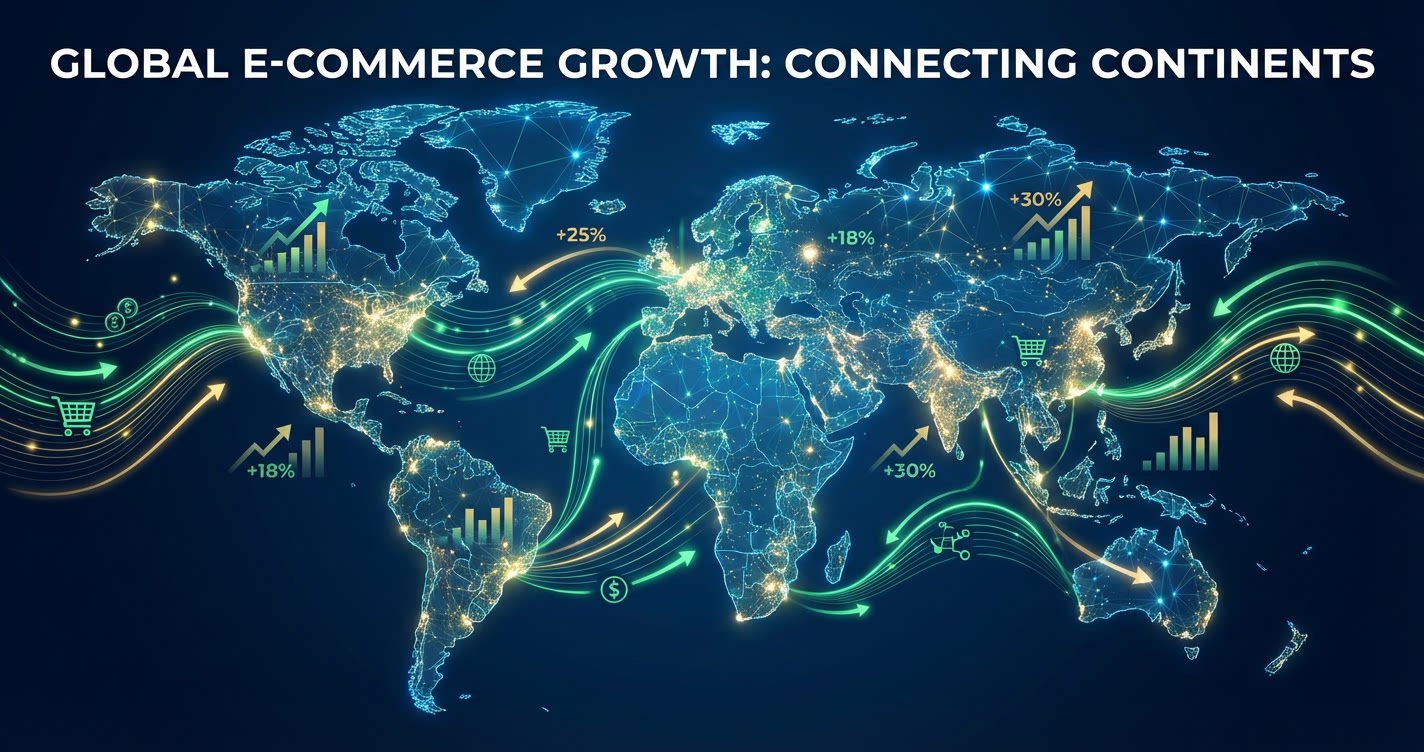
Global e-commerce growth: connecting continents
3. Why E-Commerce Needs a Translation API
The Challenge of Globalization
The numbers regarding cross-border commerce are staggering. Research consistently shows that consumers prefer—and often demand—to buy products in their native language. A purely English-language site alienates a massive segment of the global population, leading to high bounce rates and abandoned carts in high-growth regions like APAC and LATAM.
For multilingual content translation to be effective, it must be omnipresent. It’s not just about the checkout page; it’s about the product title, the detailed specifications, the user reviews, and increasingly, the visual media.
However, scaling this manually is impossible.
-
Marketplace Developers face the challenge of translating User Generated Content (UGC) from thousands of sellers in real-time.
-
Product Managers struggle with version control when managing CSV files sent back and forth to translation agencies.
-
Global Brands often fail to launch seasonal campaigns on time because localizing creative assets (images and videos) takes too long.
Challenges Without API Translation
Without a programmable solution, e-commerce teams face severe operational friction:
-
Speed to Market: Manually translating thousands of new product listings can take weeks. By the time the content is ready, the seasonal trend may have passed.
-
Inconsistent Quality: Using disparate freelance teams often leads to terminology inconsistencies. A “sweater” in one region might be translated as a “jumper” or “pullover” in another, confusing SEO and customers.
-
The Media Gap: Most legacy workflows focus solely on text, failing to address text embedded in images or voiceovers in product videos.
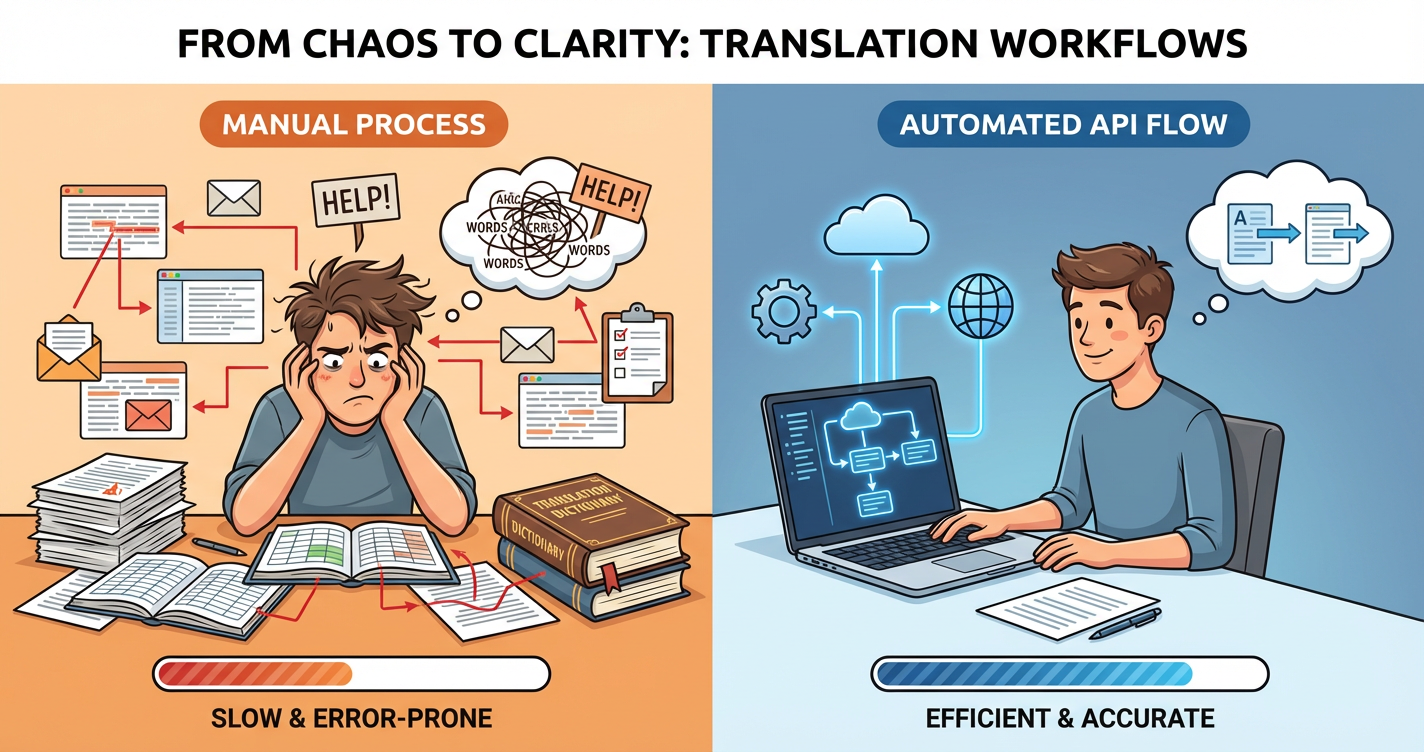
Manual translation vs Automated API workflow
What is a Translation API for E-Commerce?
A Translation API (Application Programming Interface) allows your software application—be it a CMS, PIM (Product Information Management) system, or mobile app—to communicate directly with a translation engine. Instead of a human uploading a file to a portal, your code sends content to the API and receives the translated version back instantly.
The best translation API for this sector must go beyond simple string replacement. It acts as a bridge between your backend database and your global customers, capable of processing different data formats (JSON, XML, HTML) and media types simultaneously.
4. How Aidge Solves the Localization Problem
Introducing Aidge’s Translation API
Aidge has emerged as a leader in the localization space by specifically addressing the complex needs of modern digital commerce. Unlike generic translation tools that only focus on text strings, Aidge provides a comprehensive ecosystem for multilingual content translation .
Aidge allows developers to integrate a single, powerful solution that supports 40+ languages , ensuring coverage for the vast majority of global e-commerce GDP. Whether you are expanding into the nuances of European markets or the complexity of Asian languages, Aidge’s engine is tuned for accuracy and context.
The platform distinguishes itself with its multi-modal capabilities:
-
Text Translation: Context-aware neural translation for descriptions and reviews.
-
Image Translation API: Capability to detect, extract, translate, and re-paint text within images.
-
Video Translation API: Automated transcription, subtitling, and translation for audiovisual content.
Key Features and Benefits
Scalable Localization Automation
Aidge is built for volume. Whether you are translating one user review or uploading a catalog of 1 million SKUs, the API handles the load. This allows marketplaces to automate the translation of product feeds the moment a seller hits “publish.”
Harmonized Translations
One of the biggest risks in automation is losing the brand voice. Aidge allows for the integration of glossaries and style guides, ensuring that specific brand terms, technical specifications, and SEO keywords are handled consistently across all languages.
Comprehensive Media Support
Aidge creates a cohesive user experience. When a user switches a website from English to Spanish, Aidge ensures the size chart image changes to Spanish units and text, and the product video loads with Spanish subtitles—all automated via the API.
5. Machine Translation vs Human Translation
Understanding the Difference
When integrating an API, technical leaders must decide on the “engine” powering it. Understanding the balance between machine translation vs human translation is key to optimizing budget and quality.
-
Machine Translation (MT): Powered by Neural networks (NMT). It is the backbone of scalable localization automation. It is nearly instant and extremely cost-effective.
-
Best for: High-volume product catalogs, user reviews, internal data, and real-time chat.
-
-
Human Translation: Involves professional linguists. High cost and slower turnaround.
-
Best for: Homepage slogans, high-conversion landing pages, legal terms, and brand messaging where cultural nuance is critical.
-
Where Aidge Excels
Aidge leverages advanced AI to bridge this gap. By using context-aware algorithms, Aidge provides “human-quality” machine translation for the vast majority of e-commerce content. For critical assets, the API can be configured to flag content for human post-editing (MTPE).
For most high-volume e-commerce scenarios, a high-quality machine translation API is the only way to achieve the necessary scale, reserving human translation for top-tier creative assets.
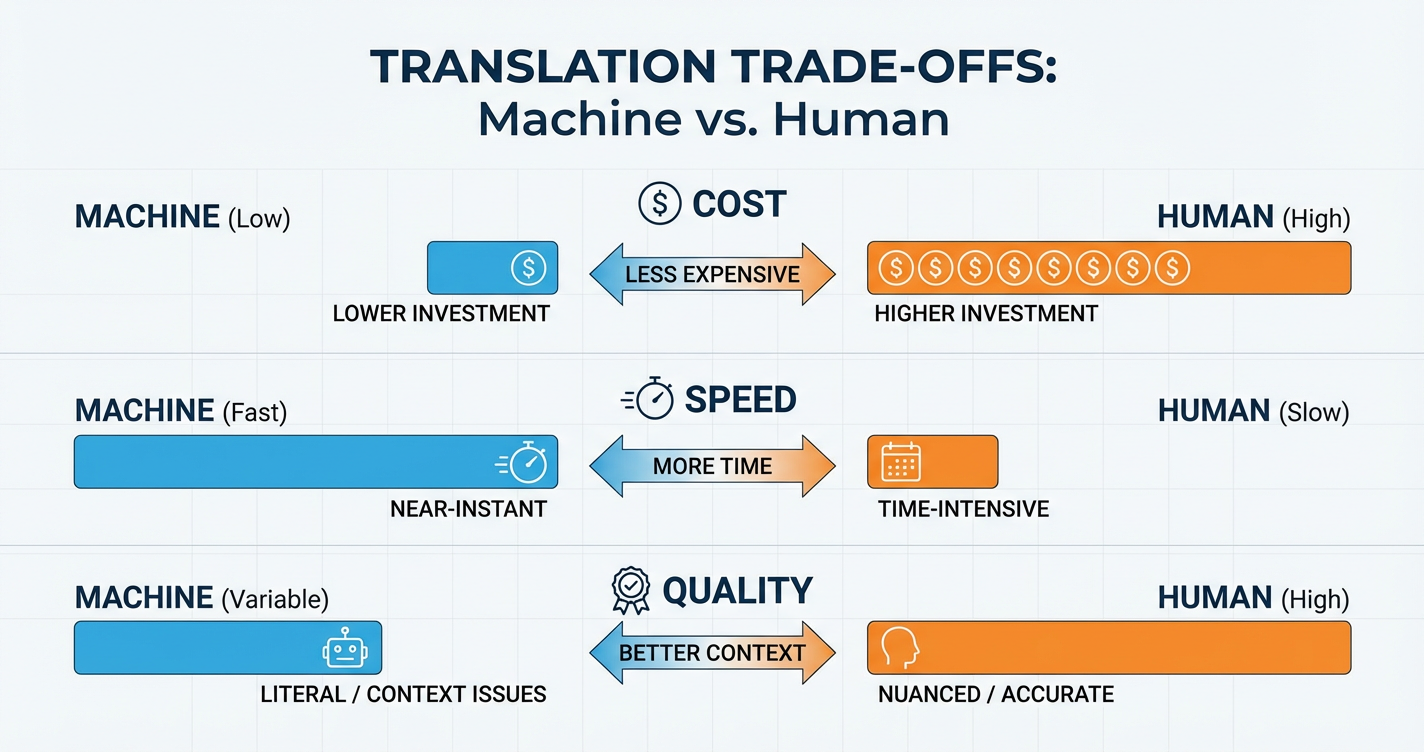
Machine translation vs Human translation
6. How to Use a Translation API in Your E-Commerce Stack
Integration Best Practices
Integrating a translation layer into your tech stack requires strategic planning. Here is a step-by-step workflow for developers and product managers using Aidge.
1. Connect to Your Backend
Connect the API to your backend. If you use a headless CMS (like Contentful or Strapi) or a custom commerce platform, use webhooks to trigger translation requests.
-
Workflow: When a new product is created in the PIM, a webhook triggers a
POSTrequest to Aidge containing the product JSON.
2. Automate Multilingual Product Pages
Ensure your API request includes not just the description, but also SEO meta tags, alt text for images, and URL slugs. This ensures your multilingual content translation strategy supports international SEO (Hreflang).
3. Leverage the Image Translation API
Don’t ignore the visuals. Configure your workflow to detect image URLs containing text (like promotional banners or spec sheets). Pass these URLs to Aidge’s image translation API endpoint. The API will return a new URL for the localized image, which you can map to the specific regional storefront.
4. Implement Video Localization
For product demonstration videos, utilize the video translation API features. You can automate the generation of SRT (subtitle) files or even translated audio tracks for every language you support. This improves accessibility and engagement without requiring a video editing team.
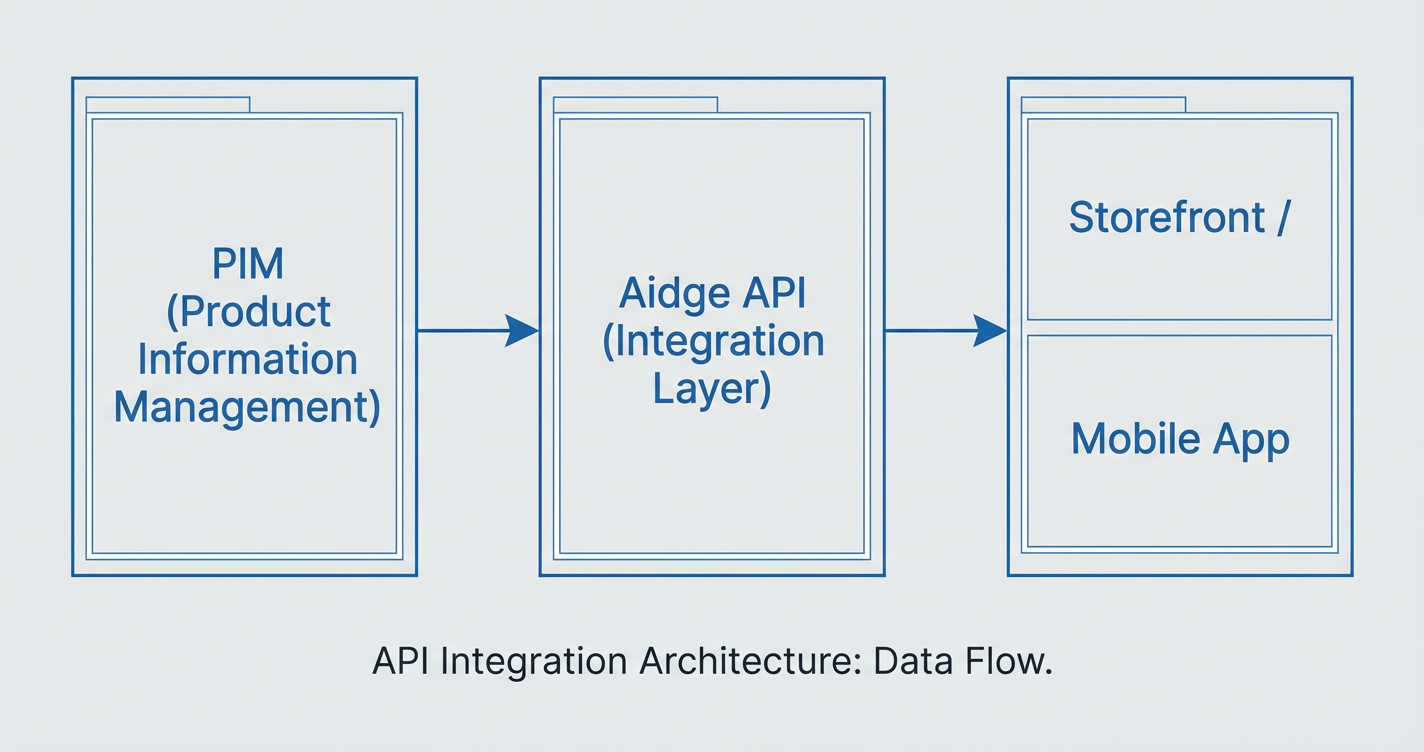
API Integration Architecture
7. Real-World Use Cases
Who Benefits the Most?
Marketplace Platforms
Marketplaces like eBay or specialized fashion aggregators use APIs to automatically translate listings from international sellers. A seller in Italy uploads a description in Italian; Aidge ensures it appears in English for US buyers and German for EU buyers instantly.
DTC Brands Expanding Internationally
Direct-to-Consumer brands often run global ad campaigns. Using Aidge’s image translation API, marketing teams can localize hundreds of social media assets in minutes rather than days, ensuring brand consistency across borders.
SaaS Vendors
SaaS platforms offering localized dashboards use real-time translation services to dynamically translate UI elements and help documentation, ensuring users fully understand the software regardless of their native tongue.
Social Commerce & Video Platforms
With the rise of “shoppable video,” Aidge helps platforms automatically subtitle user-generated video reviews, making social proof accessible to a global audience.
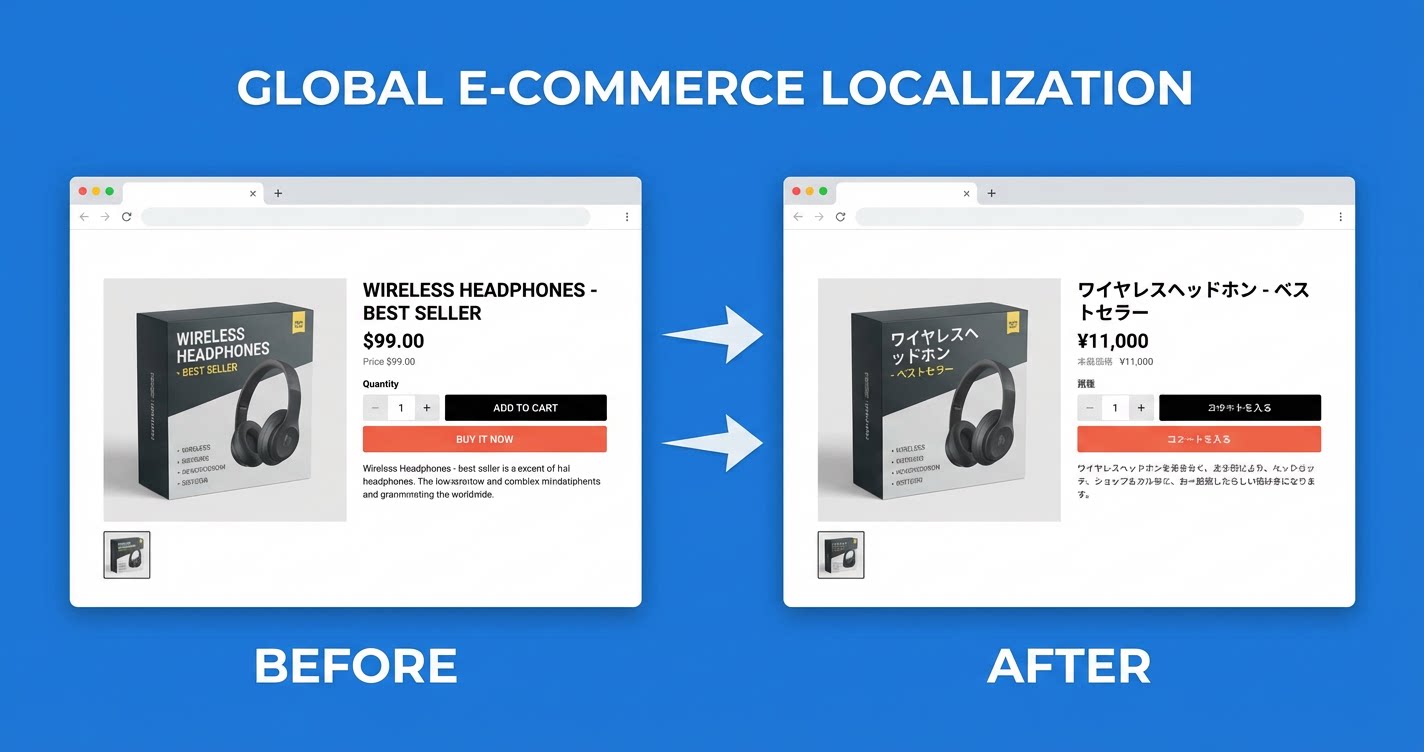
One-click localization of e-commerce products
8. Choosing the Best Translation API
What to Look For
With several providers on the market, how do you choose? Use this checklist to ensure you select a solution that supports scalable localization automation:
-
Language Coverage: Does it support the specific long-tail languages your target market speaks? Aidge supports 40+, covering major and emerging markets.
-
Media Translation Capabilities: Is the solution strictly text-based, or does it offer image translation API and video translation API capabilities? Consolidating these features into one provider like Aidge reduces technical debt.
-
Translation Quality: Look for providers that use context-aware AI models specifically trained on commerce data, rather than generic translation engines.
-
Scalability & Performance: E-commerce never sleeps. Ensure the provider guarantees high uptime and can handle burst traffic during peak seasons (like Black Friday).
-
Ease of Integration: Look for well-documented REST APIs, SDKs, and support for standard formats like JSON and XML.
9. Conclusion
In the competitive landscape of global e-commerce, speed and localization are synonymous with success. Relying on manual workflows for translation is no longer feasible for brands aiming to scale.
By integrating a powerful solution like Aidge, you unlock the ability to launch in new markets instantly, ensure consistency across all media types, and deliver a native experience to customers regardless of their language. From multilingual content translation of your catalog to automated video translation for your ads, the right API serves as the bridge between your products and the world.
Stop letting language barriers limit your revenue.
Ready to automate your global growth?
Start building a truly localized e-commerce experience today. Explore the Aidge developer documentation or start your free trial to see the power of automated media localization in action.
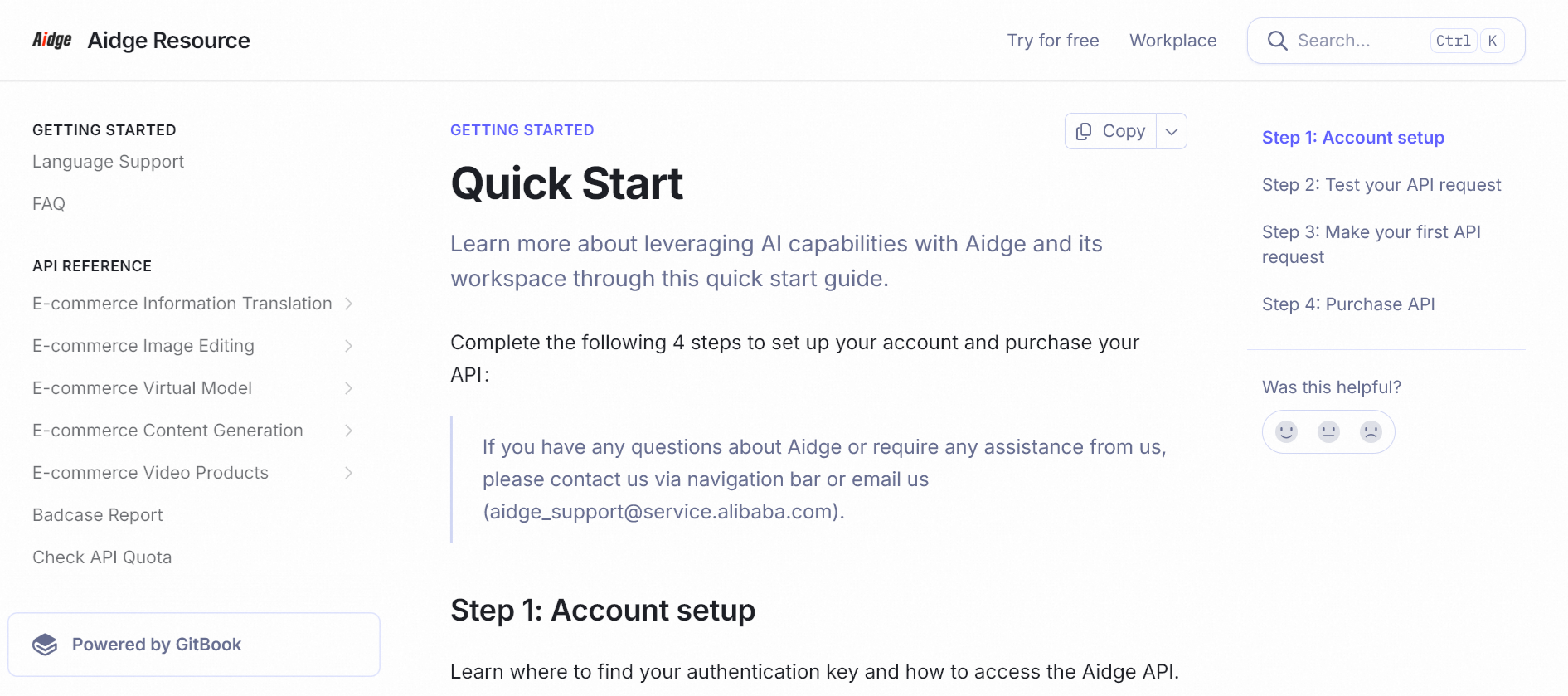
Aidge Quick Start