
Beyond Generation: How AI Image Tools Are Reshaping E-commerce and Marketplaces
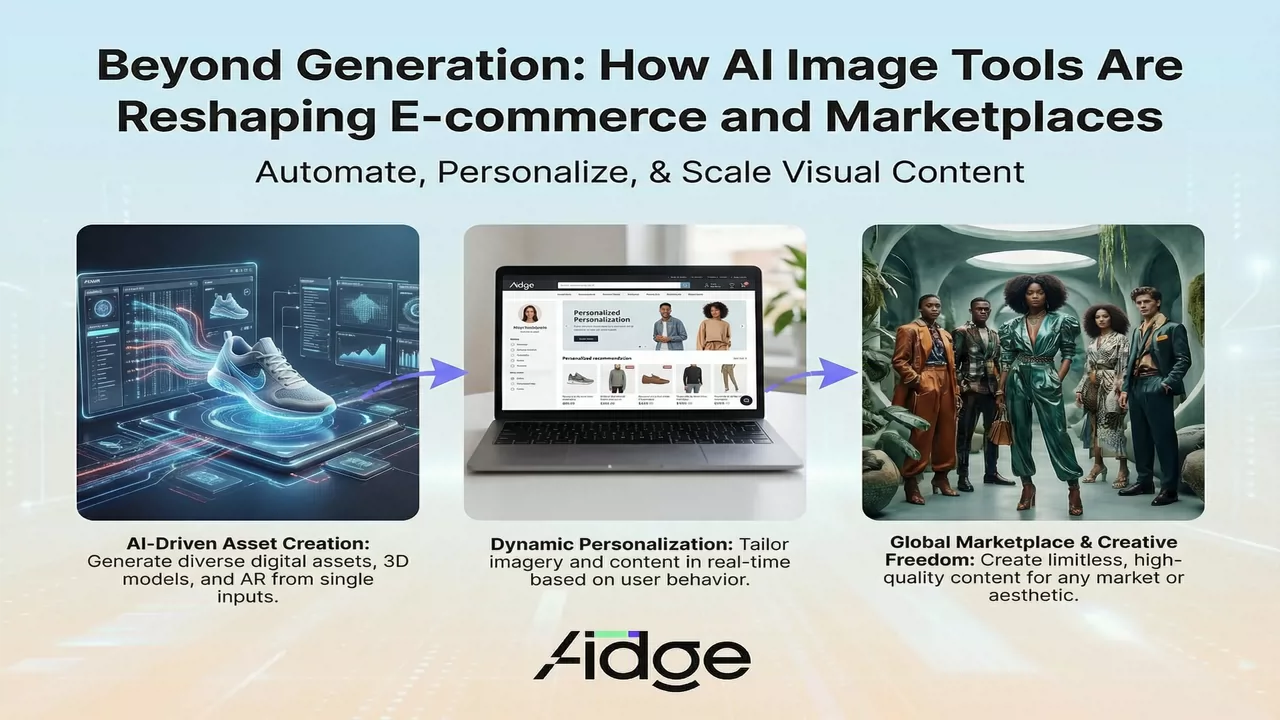
-
Generative Creation: Creating a lifestyle scene from scratch (eg, “A modern living room with a beige sofa”) to serve as a backdrop for a product.
-
Generative Modification (Inpainting/Outpainting): Taking an existing product photo and modifying specific elements—such as changing the model, removing the background, or translating text within the image—while keeping the product itself 100% accurate.
For marketplace visual tools , the second category is where the true value lies. It allows for the manipulation of visual assets at scale without compromising product integrity.
Image Challenges in Global E-commerce
Despite the availability of creative tools, global sellers and platforms face a unique set of “last-mile” problems that general AI art generators cannot solve out of the box.
1. The Localization Barrier
Cross-border e-commerce is booming, but visual barriers remain. A product infographic explaining specifications in English is useless to a buyer in Japan. Traditionally, translating an image required the source file, a translator, and a graphic designer to manually replace the text. This bottleneck makes image localization one of the most expensive aspects of international expansion.
2. The “Generic Model” Fatigue
Using the same stock model for every region reduces relatability. A winter coat listing might need a Western model for the US market but would convert better with an Asian model for the South Korean market. Reshooting the product with different models for every region is financially impossible for most brands.
3. The “commercial Intelligence” Gap
Generic AI tools don’t understand “selling points.” They might generate a beautiful image, but they don’t know that a specific visual trend is currently driving high CTR (Click-Through Rate) in the German market. Sellers struggle to create visuals that are not just pretty, but performant.
4. Technical Scalability
For a marketplace platform manager overseeing millions of SKUs, individual tools like Adobe Firefly or Canva are insufficient. They require automated solutions that can process batches of images via API, not manual desktop software.
How AI SaaS Solutions Solve These Problems
This is where specialized ecommerce SaaS solutions distinguish themselves from general-purpose image generators. By leveraging AI product imagery technologies, these platforms offer targeted solutions designed for high-volume commercial use.
Intelligent Background & Scene Generation
AI allows for “smart” background removal that goes beyond simple clipping paths. But the next evolution is “Contextual Inpainting”—placing a product into a scene that increases conversion.
Case Study: Aidge Design Agent
For retail merchants and independent sellers, the challenge isn’t just translation; it’s design. Aidge addresses this with their Design Agent , positioned as an “AI Ecommerce Designer.”
-
The Problem: Sellers often have a flat product image but lack the budget for a lifestyle photoshoot.
-
The Solution: The Design Agent uses a massive database of “best-selling” product images to understand visual trends. It allows a user to upload a product photo and use natural language to generate a scene.
-
The Outcome: Unlike a generic generator that might create a random background, this agent generates scenes based on commercial viability—creating visuals that are statistically more likely to click and convert. This moves the workflow from Upload > Describe > Hope to Upload > Describe > Sell .
Best Practices for Using AI Image Technology in Marketplaces
Adopting these tools requires a strategic approach. Here are best practices for digital marketing professionals and platform owners.
1. Prioritize “Native” Integration
Avoid relying on disjointed browser plugins. Look for image translation APIs and processing tools that integrate directly into your CMS or PIM (Product Information Management) system.
-
Why: As seen with solutions, the future is in API-level integration where the platform natively handles the heavy lifting, rather than forcing the seller to use external tools.
2. Differentiate Between “Creation” and “Optimization”
Use tools like Midjourney for brainstorming and brand concepts. Use specialized SaaS (like Aidge or Photoroom API) for the actual production pipeline. The former offers creativity; the latter offers consistency, brand safety, and correct text handling.
3. Focus on Multimodal Capabilities
The trend for 2025 is the convergence of media types. An effective strategy doesn’t just look at images. Look for solutions that can handle video translation and image text simultaneously. As video shopping (TikTok Shop, live commerce) grows, the ability to localize video assets with the same ease as static images will be a key differentiator.
4. Leverage Data-Driven Design
Don’t guess what background works. Use AI tools that are trained on e-commerce datasets. If your AI tool understands that “minimalist beige backgrounds” are converting highest in the Home Decor category this month, utilize that intelligence to scale your asset generation.
Conclusion
The evolution of AI image generators has moved past the novelty phase and entered the utility phase. For e-commerce platforms and global sellers, the ability to manipulate visuals at scale—through image localization , virtual try-on , and automated optimization—is no longer a luxury; it is a competitive necessity.
By integrating robust AI SaaS solutions, businesses can:
-
Scale Globally: Break down language barriers in visual assets instantly with multimodal APIs.
-
Reduce Costs: Slash photography and manual design budgets while improving output quality.
-
Improve Conversion: Deliver hyper-localized, visually consistent shopping experiences that resonate with local buyers.
As we look toward the future of e-commerce, the winners will be those who treat images not just as static files, but as dynamic, programmable assets powered by AI.