
Beyond Automation: How AI Design Agents Are Reshaping the Global E-commerce Landscape in 2026
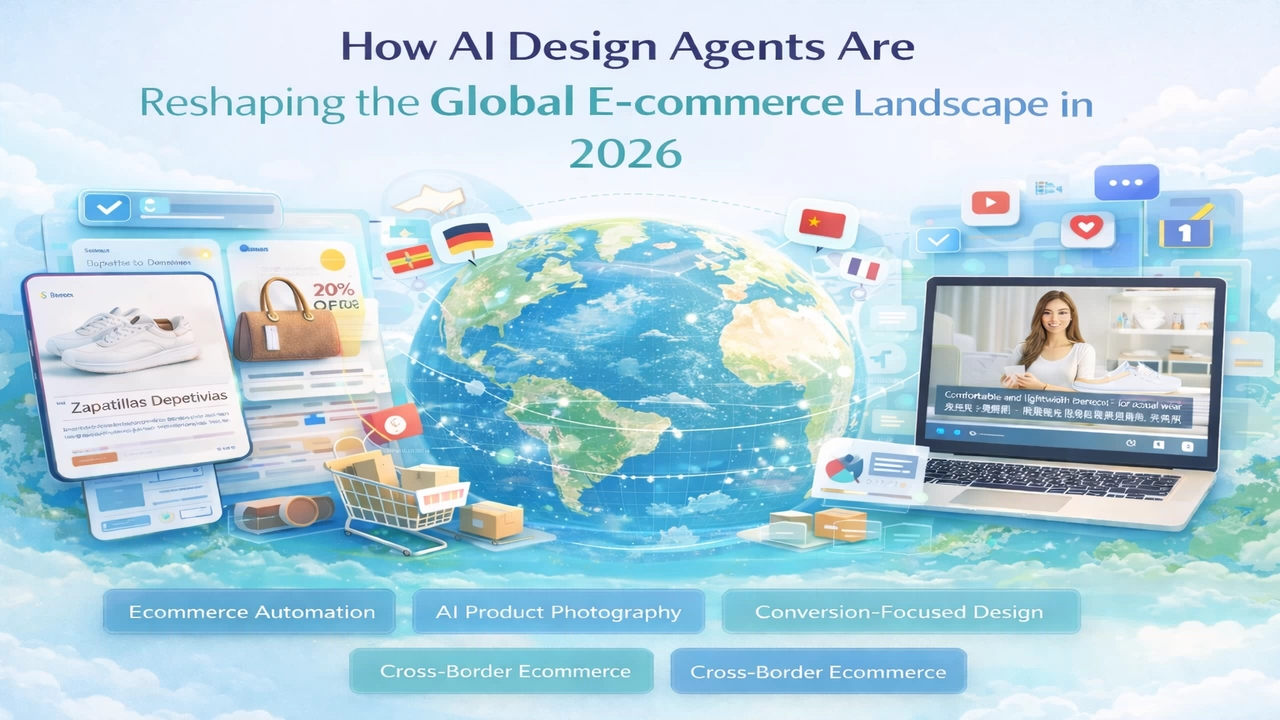
1. Introduction: The Efficiency Imperative in a Saturated Market
The era of “growth at all costs” is over. Today, global online retailers face a dual challenge: skyrocketing customer acquisition costs (CAC) and an increasingly saturated marketplace. To maintain margins, brands are no longer just looking for incremental improvements; they are seeking structural transformation. This is where AI for eCommerce ceases to be a buzzword and becomes a survival imperative.
While early adoption focused on basic chatbots, the new wave of ecommerce AI is fundamentally reshaping the value chain—from visual production to conversion optimization. We are witnessing a shift from simple ecommerce automation to intelligent, generative decision-making. As we look toward the future, the ability to leverage AI-powered eCommerce tools will be the defining factor between brands that scale and those that stagnate.
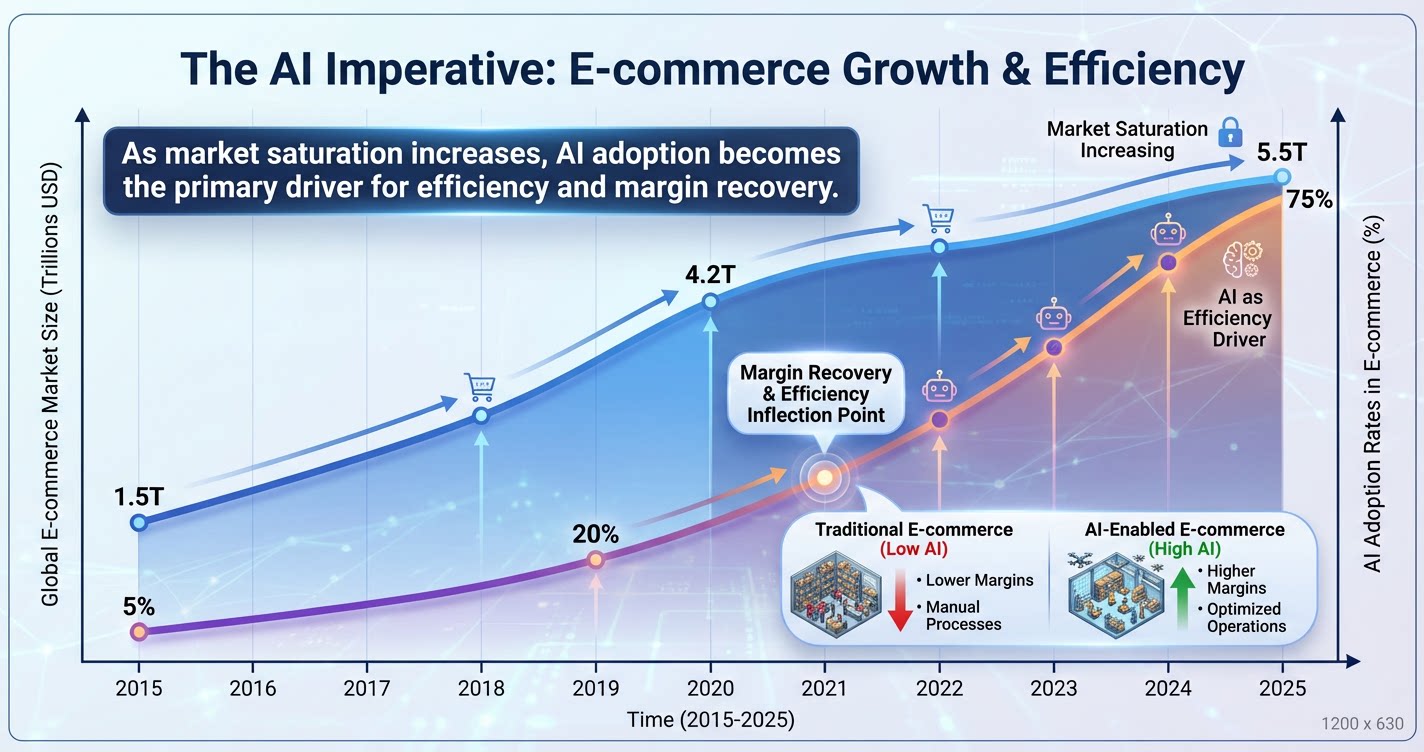
The AI Imerative: E-commerce Growth & Efficiency
2. Data-Driven Insight: The Shift from Experimentation to Infrastructure
Recent industry data reveals a compelling narrative. While the overall growth rate of traditional retail stabilizes, cross-border eCommerce continues to expand at double-digit rates. However, this global reach comes with a complexity cost: the need for localized content, diverse visual assets, and 24/7 operation.
According to 2025 market analysis:
-
73% of top-tier fashion and electronics retailers have integrated some form of AI in eCommerce workflows.
-
Merchants utilizing AI for visual creation report a 40% reduction in time-to-market for new SKUs.
-
Conversion rates are 15-20% higher for product pages utilizing personalized, AI-generated contexts compared to static stock imagery.
This data underscores a critical trend: AI is transitioning from an experimental “add-on” to critical infrastructure. It is the engine powering the next generation of retail.
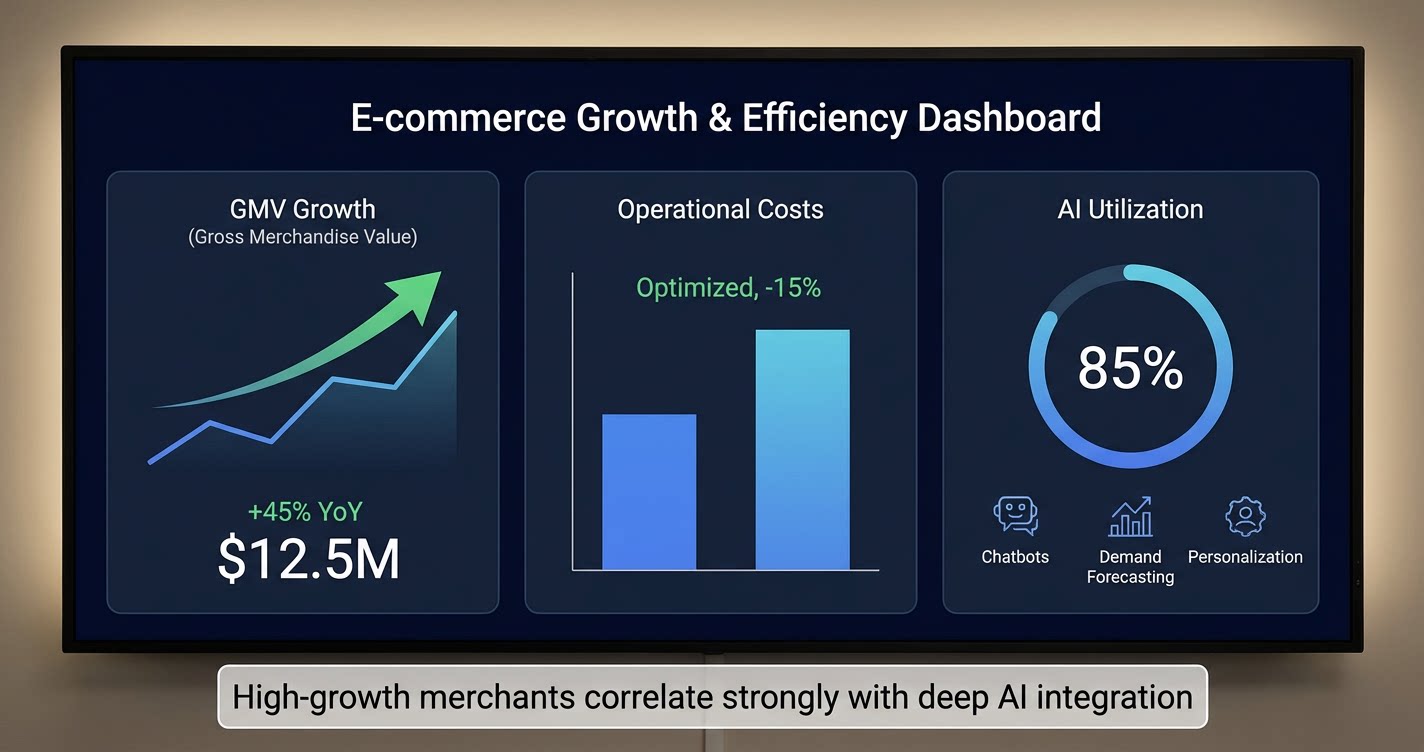
High-growth merchants correlate strongly with deep AI integration.
3. Deconstructing Core Scenarios: Where AI Drives Real Business Value
To understand the impact of ecommerce AI , we must look beyond the hype and analyze specific application scenarios that drive revenue.
AI Product Photography & Visual Content
The traditional photoshoot workflow—booking studios, hiring models, editing for weeks—is being disrupted. AI product photography allows brands to generate high-quality, lifestyle-oriented images from simple product shots. This not only slashes costs but enables AI visual content for eCommerce to be tested and optimized in real-time based on user engagement.
AI-Driven Marketing & Automation
Scaling cross-border eCommerce requires hyper-localization. AI tools can now instantly translate marketing assets, adapt visual styles to local cultural nuances, and automate ad variations. This level of ecommerce automation ensures that a brand feels “native” in every market it enters.
The Rise of the AI Design Agent
Perhaps the most significant leap is the move from fragmented tools to autonomous agents. An AI design agent doesn’t just “edit photos”; it understands brand guidelines, campaign goals, and design aesthetics to generate ready-to-use commercial assets for banners, landing pages, and social media.

AI-Driven Content Generation
4. Why the “AI Design Agent” Represents the Next Generation of Productivity
In the past, “design automation” meant rigid templates. Today, an AI design agent represents a paradigm shift.
Traditional design workflows are linear and bottlenecked by human capacity. In contrast, an AI Design Agent offers:
-
Infinite Scalability: Generate hundreds of variations for A/B testing in minutes.
-
Brand Consistency: Unlike generic GenAI models, specialized agents are trained to adhere strictly to brand visual identities.
-
Conversion Focus: The goal isn’t just art; it’s revenue. Conversion-focused eCommerce design prioritizes layout, visual hierarchy, and call-to-action placement based on performance data.
By integrating an AI design agent into the workflow, brands can achieve what was previously impossible: personalized visual merchandising at a mass scale.
5. Trends Forecast: What to Expect in eCommerce Trends 2026
Looking ahead, eCommerce trends 2026 point toward a fully “Agentic” future.
-
From Tools to Systems: We will move away from using disparate AI-powered eCommerce tools (one for text, one for image, one for translation) toward unified platforms where AI Agents collaborate to manage the entire product lifecycle.
-
From Cost Reduction to Value Creation: The narrative will shift from “AI saves money” to “AI creates brand equity.” High-quality, AI-generated storytelling will become the standard.
-
Cross-Border as Default: With AI breaking down language and visual barriers, every e-commerce business will effectively be a global business.
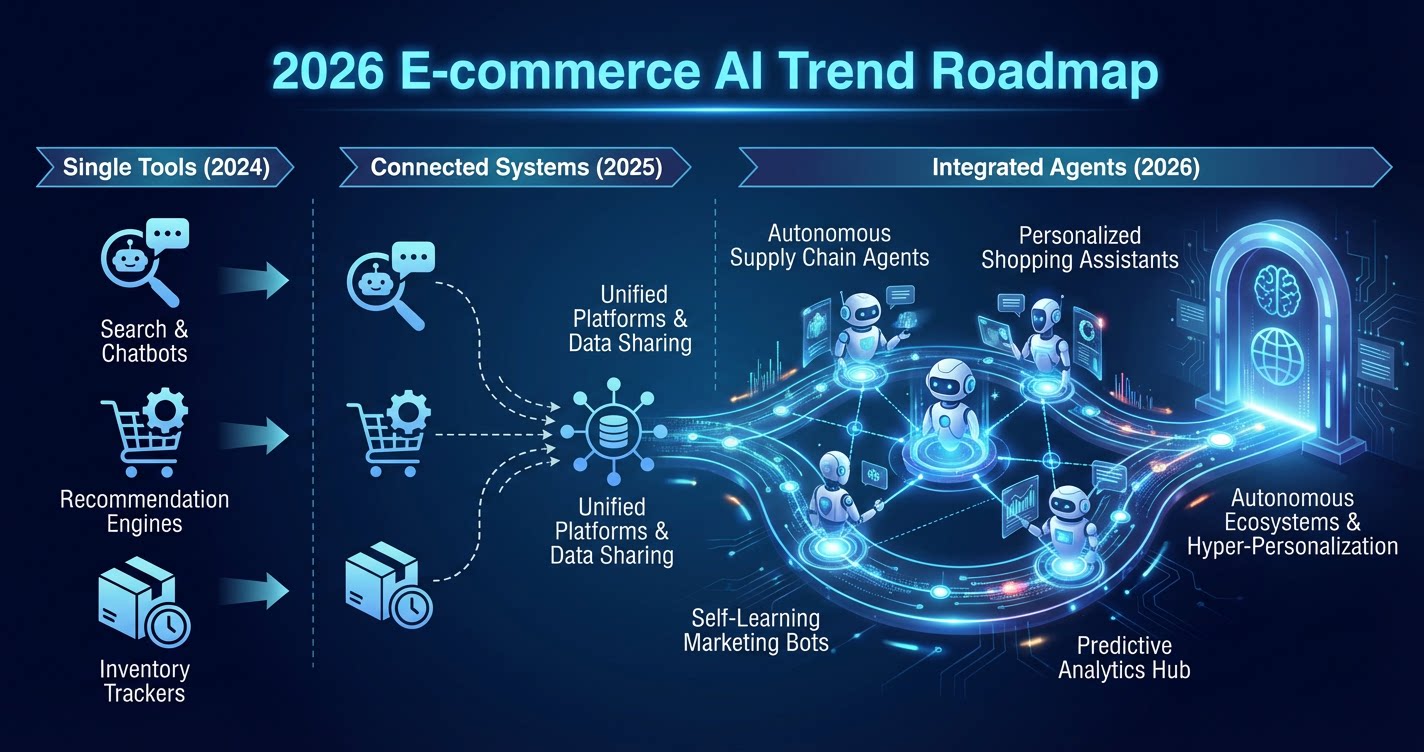
E-commerce AI roadmap: from ‘single tool’ to ‘integrated agent’
6. Industry Solution: The Need for Specialized AI
As the industry matures, generic AI models (like standard ChatGPT or Midjourney) often fail to meet the specific, high-fidelity needs of professional sellers. They lack the context of merchandise, the understanding of SKU logic, and the nuance of brand guidelines.
The market is demanding vertical solutions—specialized brains built for commerce. This is where platforms like Aidge are stepping in to fill the gap.
As a comprehensive AI Design Agent and visual content solution, Aidge addresses the specific pain points of cross-border eCommerce . By combining the generative power of AI with deep industry know-how, it allows brands to produce conversion-focused eCommerce design assets across multiple languages and markets instantly. Solutions like Aidge are not just creating images; they are acting as an intelligent extension of the creative team, ensuring that AI visual content for eCommerce is both scalable and brand-safe.
7. Conclusion: AI as the Long-Term Growth Engine
The integration of AI in eCommerce is not a temporary trend; it is a fundamental restructuring of how digital retail operates. As we approach 2026, the competitive advantage will belong to those who view AI not as a shortcut, but as a strategic partner.
Whether it is through leveraging AI product photography to reduce time-to-market or deploying an AI design agent to master global personalization, the message is clear: In the future of commerce, efficiency and creativity are no longer tradeoffs—they are synonymous, powered by AI.